


The most important design decision in an agent-first world has nothing to do with your API.
It’s deciding where a human still needs to be in the room.
Agents are fast, tireless, and increasingly capable. They’re also unpredictable. They hit edge cases. They make confident mistakes. And when stakes are high - financial, regulatory, reputational - you can’t let automation run unchecked and hope for the best.
The companies that get this right won’t be the ones who remove humans from the process. They’ll be the ones who design the handoff. Who ask: at what point does a human need to see this, verify it, override it? What does a clean audit trail look like? How do you make it easy for a person to step in without breaking the flow?
The UI isn’t going away. It’s changing jobs - from primary interface to trust surface. The place where humans verify, approve, and course-correct. That’s actually a more important job than it used to be.
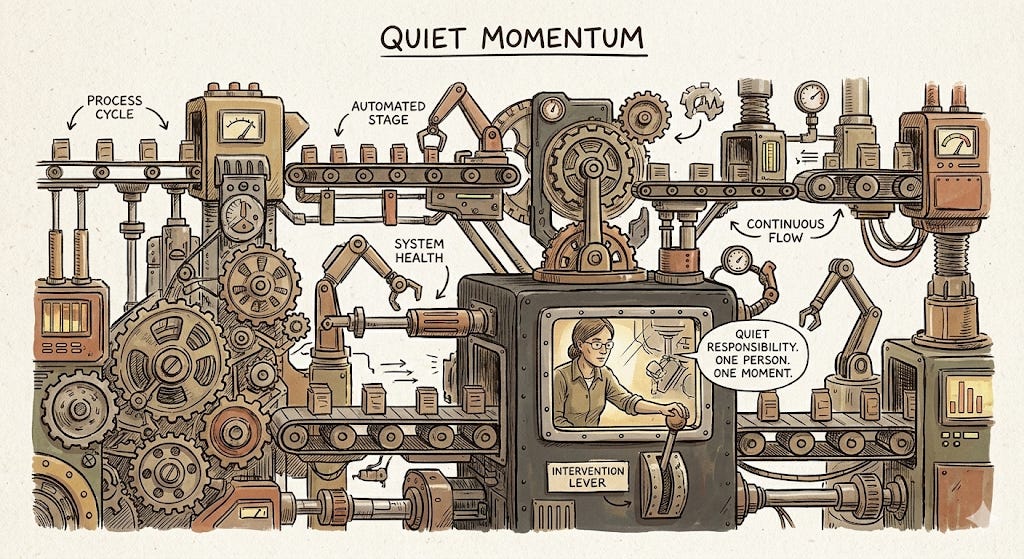
As agents take on more of the operational work, the human role shifts. From doing to verifying. From executing to steering. That requires a completely different set of instincts.
How do you review work you didn’t do? How do you spot an error in output you couldn’t have produced yourself? How do you stay accountable in a world where the work moves faster than you can fully follow?
These aren’t rhetorical questions. They’re design problems - for software, yes, but also for organizations, teams, and how we think about work itself. Nobody has clean answers yet. The companies asking the questions seriously are already ahead.
The ones who aren’t will build beautifully functional products and wonder why nobody trusts them.
🙏
Be kind,
Manuel