


On June 9, Anthropic released Fable 5, its most capable model yet. Three days later, the US government took it off the market.
The order cut access to Fable 5, and to the more powerful system behind it, Mythos 5, for any foreign national anywhere, reportedly including Anthropic’s own engineers who hold foreign passports. The reason given was national security: the model can be talked past its guardrails into helping with cyber attacks.
A powerful tool was there on Tuesday and gone by the weekend.
This is the whole reason we made sovereignty the theme of PIRATE Night on June 24. Last week, the argument made itself.
🏴☠️
A quick PIRATE Night update, because it’s close now.
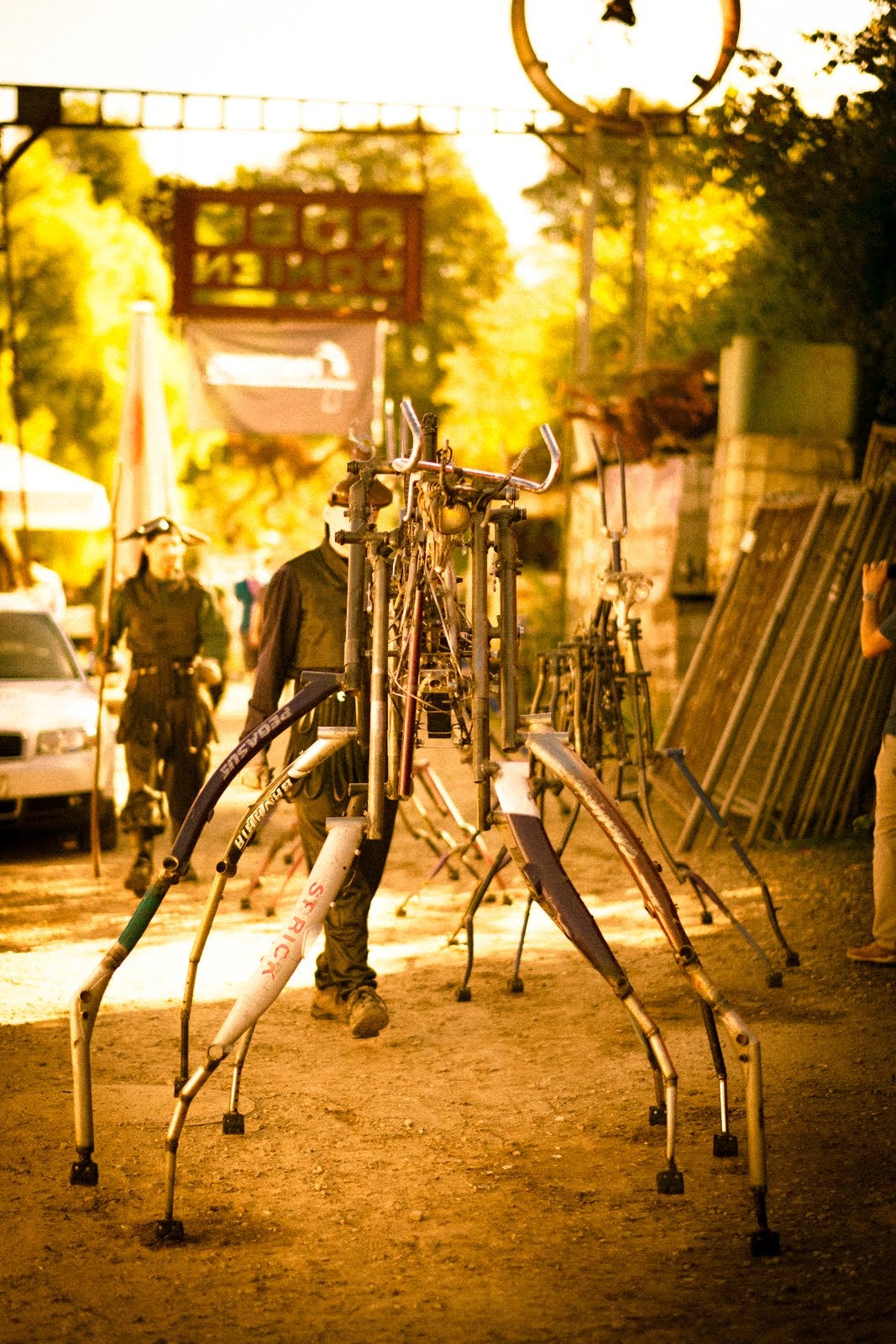
We gather on June 24 in Odonien, Cologne. That afternoon, before the Night kicks off, there are three free community events. Each needs its own registration (register here), and each needs a PIRATE Night ticket:
- Symbiosis: Angels × VCs Think Tank with Investor Klaaf, for selected angels and VCs. Capital is a dependency too, and this is the room to talk about it.
- IMPACT AHOY, hosted by Tobias, Simon and Freddy, for founders, investors and those who want to think seriously about doing the most good.
- Vibe On Your Terms, the 10-year celebration of Pirate Skills with Ben Sufiani and his community. A conversation between Ben and me, two talks, and people sharing what 10 years made possible.
Pirate Skills turning ten fits this theme better than anything I could have planned. Skills are the one layer of the stack nobody can pull out from under you. Tools get deprecated, platforms change the rules, models get switched off. The ability to build and adapt stays yours.
Also, we have announced the first speakers. If you’re coming, raise the flag and tell people. Make your own image and share it.
More this week. We’re almost there.
🏴☠️
There’s a lot of noise around the Fable ban. You can call it a power play, and the timeline fits. You can call it a company that spent a year calling its model too dangerous to release, then got taken at its word by a regulator who could act. Both are partly true. Neither is the lesson.
Frontier AI is the same as every other strategic technology. Many thought it would just be a global utility, on tap, for anyone with a credit card, forever. It won’t be. What happened to Fable can happen again, and given how strategic these models have become, it probably will. Treat the Fable ban as what it was: a test run.

Commodity and Weapon at the Same Time
“AI model” now covers two different things.
One is commodity intelligence. Cheap, good enough for most work, a dozen substitutes a click away. It’s genuinely commoditizing. Remember when we all raved about Sonnet or Opus 4.6? Now they are our fallback models.
The other is frontier intelligence, the top of the curve, where capability is scarce and stays scarce. This is the part that matters, because the value of intelligence isn’t linear. The gap between very good and better-than-anyone-else is small in size and enormous in payoff, since it unlocks things no one else can do. A short lead at the frontier can decide a market, or a conflict. That’s why governments want it, and why they’ll take it.
Put the two halves together and you have the real problem. An off-switch only bites when you can’t easily replace what it controls. That is exactly the frontier, the one tier with no equal substitute. This week we learned who holds its switch. Not priced up. Not degraded. Off.
For now, though, that switch barely stings. You drop back to the previous model and keep working, because the distance between best and second-best is still small. That distance is the thing to watch. The edge that makes the frontier worth having is the same edge that keeps pulling it away from the fallback, so the gap grows as the frontier moves. The day it is wide enough, being cut off stops being a shrug and becomes a wall.
Customer Number One
We talk about these models as a product you buy. The last days showed who the real customer is. The public felt like the customer because the tap was open, and a tap stays open only until someone with priority wants it closed. The government didn’t need to buy Anthropic or nationalize it. It just exercised the first claim it always held. An export control is the cheap way to do what nationalization does expensively: decide who may use a thing, who may sell it, who may even look at it. We weren’t Customer Number One. We had access on loan, and this week it was called back.
And the fair objection: doesn't every government do this? Yes. That's the point, not the rebuttal. Strategic technology has always worked this way, and Europe works it from the other side. The machines that print the world's most advanced chips are built by one Dutch company, using optics only one German company can make. Those machines do not go to China. Europe holds that switch, and it has used it.
Sovereignty is not an asset you acquire. It is an architecture you build. You don’t win this by owning the smartest model. You win it by never being in a position where one directive, from one capital, on one Tuesday, can break you.
Bigger Than the Operator’s Problem
The easy version of this essay stops at the operator’s advice: keep your options open, own your customer relationships, don’t put your core on a switch you don’t control. True, and worth doing.
But it’s bigger than that. A continent that needs another government’s permission for the century’s most strategic capability is not sovereign in any way that counts. Not because a model going away breaks us today. It doesn’t. Because the dependency is a switch in someone else’s hand, and switches get thrown when interests diverge. The chip supply works the same way, only deeper. Lose that and nothing else matters. Intelligence is the newer exposure, stacked on the older one.
Three Timeframes That Don’t Agree
So what should Europe do?
Short term, we depend on these models and there’s no real substitute at the frontier. I use them. I’ll use them next week. The move isn’t to quit in protest. It’s to use what works while keeping anything you can’t afford to lose off a single switch.
Medium term, we build. Fund a big European model, and don’t stop at one, because the goal should not be a single champion. It’s a field: a second, a third, real competition. Build it under hard legal agreements between the governments paying in, because a dependency you have a vote in is different from one you don’t. And build the open layer beside it, weights you can run on your own hardware. That solves two problems at once, the switch and the data. The more your value sits in proprietary data, the less you want to hand it to a model you don’t control. Open and private is the only version where the data stays yours.
Long term, this is national security in the plain sense of the word. Whoever controls the most powerful technology sets the terms for everyone who doesn't. Europe doesn't need a textbook for this. We built an industrial economy on cheap energy from a supplier we assumed would always sell, and we found out what that assumption was worth. Intelligence is moving into the same position, one layer up. Treating it as a convenience is the same mistake in a new domain.
These three don’t reconcile. I’m telling you to use the American models, build the European ones, and treat the dependence as a strategic threat, at the same time. It looks like a contradiction. It is. It’s also just honest.
Don’t Mistake Free for Yours
One warning, so the open answer doesn’t become its own comfortable story. Open weights today often means Chinese models, and the next versions of some are already moving behind closed doors. The open tap has an owner too. Trading Washington’s willingness to sell for Beijing’s willingness to share is not independence.
The only exit that’s truly yours is what’s already published and what you can rebuild. In the 1990s the US classified strong encryption as a weapon and tried to control its export. It failed, because the math was already public, and you can’t recall a published thing. Weights that are already out have no switch left to flip. That’s the version worth funding.
What I Don’t Know
I don’t know if Europe can close the gap at the frontier. We’re behind on the hardest problems, and I’m not sure that gap is even the decisive question. And I’m not at a safe distance. My own companies run on these models. If the switch flips on the ones I use, I feel it too. Part of this is me thinking out loud and not loving the answer.
We chose this year’s PIRATE Night theme in May, before this escalation. We called it On Your Terms. The question was never whether to depend on anyone. You can’t build alone. The question was always whose terms, and whether you’d notice the day they changed.
Last week a lot of people noticed at once, while it was still cheap to notice.
We’ll talk about this on June 24 at PIRATE Night. How we got here, what’s at stake and what we can do about it.
We can get frustrated about this, we can give up, or we can build.
Let’s build.
🙏
Be kind,
Manuel
With full respect but we can’t build a competitor to Claude or ChatGPT with EU red taping, regulations and taxation policies.
In order to compete with US we need to have an open space for builders and allow to move fast and break things. And EU regulations are exact opposite of that unfortunately.
But hey, at least we have full guidelines on regulations of AI while we have zero AI products that can compete with rest of the world